
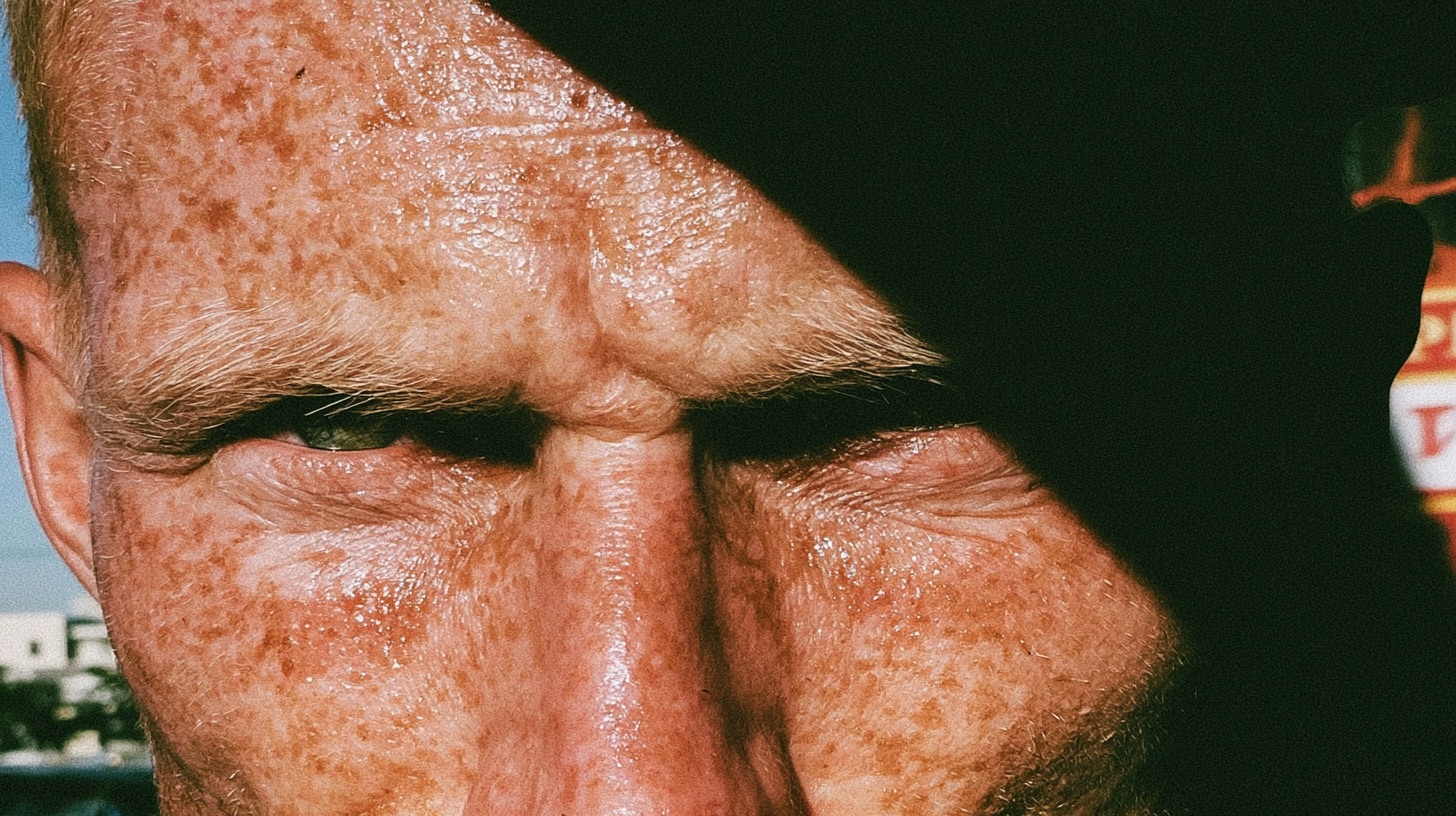
am I more likely to get skin cancer as a man?
Yes. 2.4× more likely to die from melanoma. Not genetics. Not bad luck. Male biology plus behavioral choices combined.

Men die of melanoma at nearly 2.4 times the rate of women. This isn't a secret. It's in every epidemiological database. Yet it's the fact nobody talks about in the men's grooming space. The number is worse for recurrence rates and distant metastasis.
The question isn't whether men are at higher risk. The question is why — and what you can actually do about it.
Men are 2.4× more likely to die of melanoma than women. The cause isn't genetics alone. It's behavior plus biology.
Male mortality rate of 3.9 per 100,000 vs. female rate of 1.6 per 100,000 — consistent across most developed nations
it starts with behavior
Women wear daily SPF. Men don't. This is the data:
Sunscreen use: 29% of women use sunscreen regularly. Only approximately 12% of men do. That's not because women are more vain — it's because they know sun damage causes aging, and they act on it. Men treat sunscreen as optional, something for beaches and vacations.
The result: men accumulate more lifetime UV damage by their 40s than women do. More damage means more mutations. More mutations mean higher melanoma risk.
but it's not just about behavior
Even if men wore sunscreen at the same rate as women, they'd still have higher melanoma mortality. Because there are biological differences:
Skin biology: Men's skin is 10-20% thicker than women's. It repairs UV damage more slowly. The immune response to melanoma is weaker in males — partly due to androgen receptor involvement in melanoma growth and immune suppression.
Hormone differences: Estrogens provide some protective effect against melanoma progression. Testosterone doesn't. This isn't something a man can change, but it explains why even protected men still have higher baseline risk than protected women.
the detection problem
Men don't check their skin. Women do. By the time a man notices something, it's often later-stage melanoma.
A woman with a changing mole often notices it. She mentions it to her doctor. Early detection. Better prognosis. A man doesn't look at his back, his scalp, or the soles of his feet. A changing mole becomes a dark spot. Then a bump. Then a spread. By the time he notices, it's already advanced.
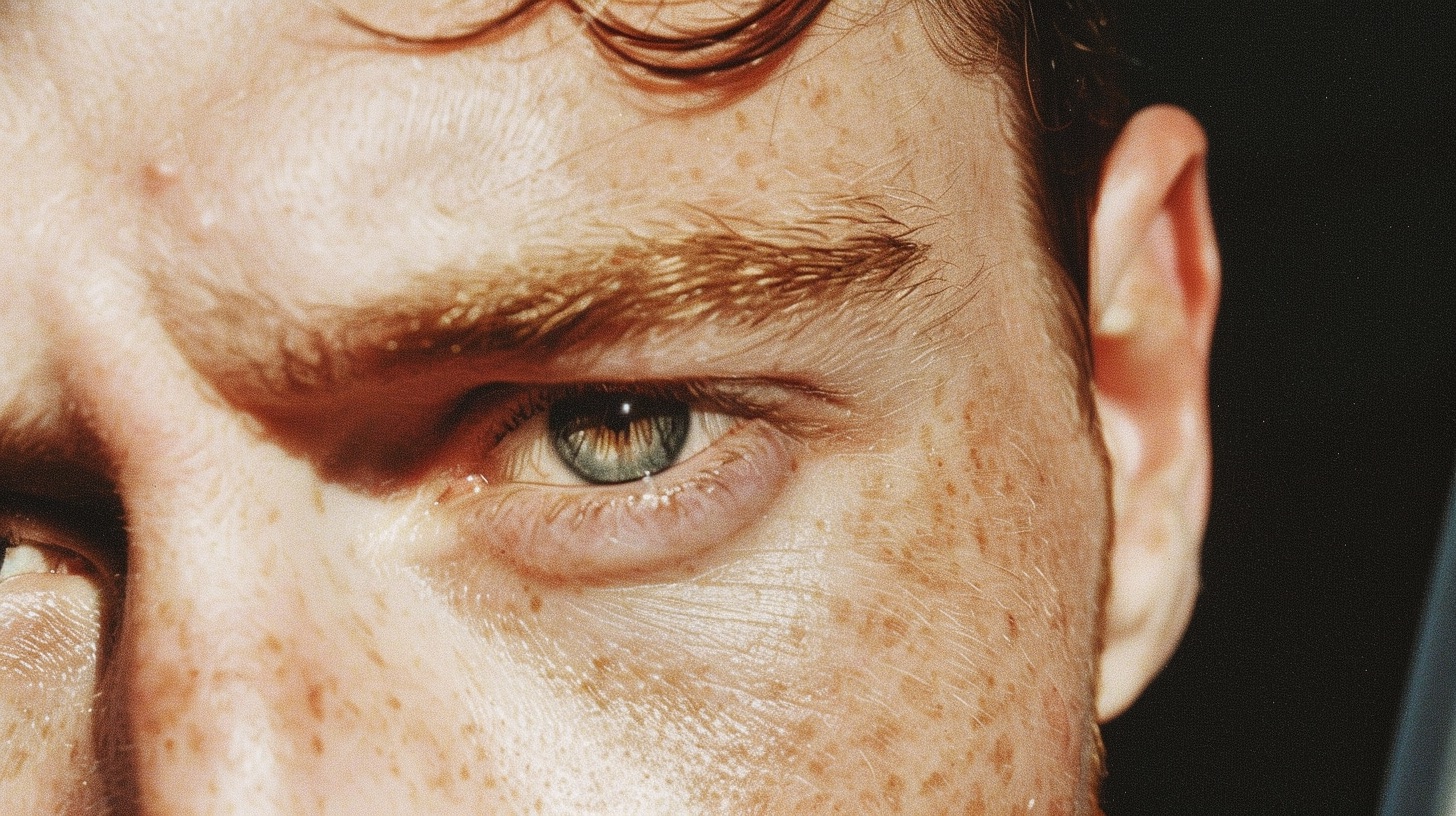
This detection delay is a huge part of the mortality gap. Men don't lack risk — they lack awareness.
what actually works
The math is simple:
Daily SPF50: Stops 98% of UVB and reduces UVA damage significantly. This is non-negotiable. Not for vanity. For survival.
Self-examination: Check your skin once a month. Look at your back (use a mirror). Look at your scalp (part your hair). Look at the soles of your feet. The ABCDE rule: Asymmetry, Border irregularity, Color variation, Diameter (>6mm), Evolution (changing).
Annual skin check: See a dermatologist once a year. Not when you notice something. Once a year, regardless. This catches melanomas at stage 1, where 5-year survival is >95%.
The bloke who dies of melanoma at 55? He made three choices: 1. Didn't use SPF daily 2. Didn't check his skin 3. Didn't see a dermatologist until symptoms showed All three are within his control.
Men are 2.4× more likely to die of melanoma. But they're also 2.4× more likely to skip the three things that prevent it.
the uncomfortable truth about risk
Risk isn't punishment. It's information. Higher melanoma mortality in men isn't because men are unlucky — it's because the cost of prevention is zero compared to the cost of treatment.
SPF takes 10 seconds. Self-examination takes 5 minutes once a month. A skin check takes 15 minutes once a year.
The alternative is possible death. Not probable. But possible. And entirely preventable.
further reading
For more information from medical authorities: - [WHO — ultraviolet radiation fact sheet](https://www.who.int/news-room/fact-sheets/detail/ultraviolet-radiation) - [Euromelanoma — Prevent skin cancer](https://www.euromelanoma.eu/en-intl/prevent-skin-cancer) - [Cancer Research UK — Sun safety](https://www.cancerresearchuk.org/about-cancer/causes-of-cancer/sun-uv-and-cancer/sun-safety)
quick answers